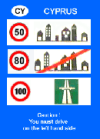
| Type of Road | Sign | Approx. mph | ||
| Highway: (Motorway) | Maximum speed limit | 62 | ||
| Minimum speed limit | 40 | |||
| Built-up Areas: | Maximum speed limit | 31 | ||
| Country Roads: | Maximum speed limit | 40 | ||
| Hazards: | Maximum speed limit bends, roadworks, schools etc. | 18 | ||
| National Speed Limit: | Maximum speed limit | 50 | ||
| National Speed Limit applies: | 50 |
The sign indicating that you are entering a limit will normally only be displayed on your side of the road.
Having entered a posted limit, you will rarely find the small repeater signs that you might see in the UK. The next sign you will see may be a change in speed limit or when you pass a municipal boundary.
It is often not clear when a speed limit ceases to apply. You will rarely see a de-restriction sign. There are long stretches of road that could be de-restricted because of the layout and lack of hazards, but the last limit still appears to apply.
Sometimes, the opposing traffic traveling on the same road is governed by a different speed limit,
Speed limits posted at hazards, such as bends, are usually advisory in the UK. In Cyprus, they are mandatory and must be obeyed. They are often badly placed. You will not find many of the locals adhering to them.
The maximum speed limit allowed in Cyprus is lower than in the UK and can lead to impatience and an itchy right foot.
The Cyprus Police applies a margin of error before issuing a ticket. This tolerance has changed significantly in recent years, being stricter in residential areas.
While these tolerances exist, they are at the discretion of the police and speed camera calibrations. It is always safest to stick to the posted limit.