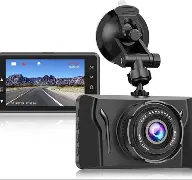
Drivers in Cyprus will be allowed to use dashboard cameras (dashcams) from 23 July 2026, following the introduction of new legislation aimed at improving road safety, supporting accident investigations, and helping police tackle traffic-related offences.
The new law, published in the Official Gazette on 22 April 2026, establishes a legal framework for the installation and operation of image-recording devices in private vehicles, commercial fleets, and government-owned vehicles. Until now, the use of dashcams has existed in a legal grey area due to concerns surrounding privacy and data protection.
Purpose of the New Law
The legislation permits dashcams to be used for several specific purposes:
- Protecting drivers by providing evidence in the event of a road traffic collision.
- Recording dangerous driving, traffic violations, accidents, or criminal activity.
- Assisting police investigations through the submission of relevant video evidence.
- Monitoring commercial vehicle fleets when accidents, criminal incidents, or security concerns arise.
Lawmakers argued that the measure reflects the reality that many modern vehicles already come equipped with recording technology and that clear rules were needed to regulate its use.
Strict Privacy Safeguards
While dashcams will be legal, their use will be subject to strict data protection requirements.
The legislation prohibits the uncontrolled collection and misuse of personal data. Recordings must be handled in accordance with Cyprus’ data protection laws and the requirements of the General Data Protection Regulation (GDPR). Drivers who misuse footage could face administrative penalties or other sanctions under data protection legislation.
The Office of the Commissioner for Personal Data Protection is expected to issue detailed guidance covering:
- How recordings may be collected.
- How long footage can be retained.
- Who may access recordings.
- The circumstances under which footage can be shared with authorities.
Restrictions on Sharing Footage
One of the most important provisions concerns the publication of recordings.
Drivers will not be allowed to upload or publicly share dashcam footage containing identifiable individuals, vehicles, or other third parties without obtaining the necessary consent. Where minors appear in recordings, permission from a parent or legal guardian will be required before any publication can take place.
The final version of the law also removed provisions that would have permitted audio recording, limiting dashcams to video recording only.
Access by Police and Insurance Companies
Police authorities and insurance companies will be permitted to request and use dashcam footage when investigating:
- Traffic offences.
- Road traffic accidents.
- Suspected criminal acts.
- Insurance liability disputes.
Supporters of the legislation believe that video evidence could help establish responsibility more quickly following collisions and reduce disputes between drivers and insurers.
Use in Court Proceedings
Although dashcam recordings may assist investigations, the law does not automatically grant footage evidential status in court.
Instead, judges will decide on a case-by-case basis whether a particular recording is admissible and what weight it should be given during legal proceedings. A recording alone will not automatically constitute proof of liability or wrongdoing.
Parliamentary Debate
The legislation was approved by the House of Representatives after considerable debate. Supporters argued that dashcams are already widely used throughout Europe and can improve road safety, assist law enforcement, and help resolve insurance claims more efficiently.
Opponents, however, expressed concerns that widespread recording could lead to excessive surveillance and potential infringements on citizens’ privacy rights. Questions were also raised regarding the storage, retention, and potential misuse of recorded footage.
What Drivers Need to Know
From 23 July 2026:
- Dashcams will be legal in Cyprus.
- Video recording will be permitted, but audio recording will not.
- Footage can be used for accident and crime investigations.
- Police and insurers may request relevant recordings.
- Public sharing of footage without consent will generally be prohibited.
- Data protection rules must be strictly followed.
- Courts will decide whether recordings are admissible as evidence.
The new framework aims to balance the benefits of modern vehicle recording technology with the need to protect personal privacy, marking a significant change in Cyprus’ approach to road safety and digital evidence.